Following its overseas breakthrough in May this year — when YR High-Tech's water-electrolysis ceramic electrodes first exported to Tokuyama, Japan — the company has continued to win market news: batch orders from leading electrolyser makers including Huadian Kegong, CIMC Hydrogen Energy, Jingdian Equipment and Zhongtian Huahua, with cumulative ceramic-electrode orders now exceeding 10,000 units, drawing wide attention across the industry.
Bringing any new technology to commercial deployment takes long-term R&D refinement and multi-condition validation. YR High-Tech's ceramic electrode project formally launched R&D in February 2023 and publicly released the product on 30 August 2023. Over the following year-plus, the product completed multiple rigorous test campaigns, including 2,000+ frequent start-stop cycles, a 1.9 V @ 8,000 A/m² high-current-density performance test, and wind-solar hydrogen simulation tests. Repeated real-world results show that the ceramic electrode is well suited to the complex conditions of wind-solar renewable hydrogen production and is a highly competitive electrode solution for green-hydrogen preparation. From project kickoff to batch commercialisation took just one and a half years.
According to feedback from two European electrolyser manufacturers, after 1,000+ start-stop cycles, no performance degradation was observed in YR High-Tech's ceramic electrodes during testing.
The ceramic electrode's market recognition stems from its combined strengths of high performance, long service life and controllable overall cost.
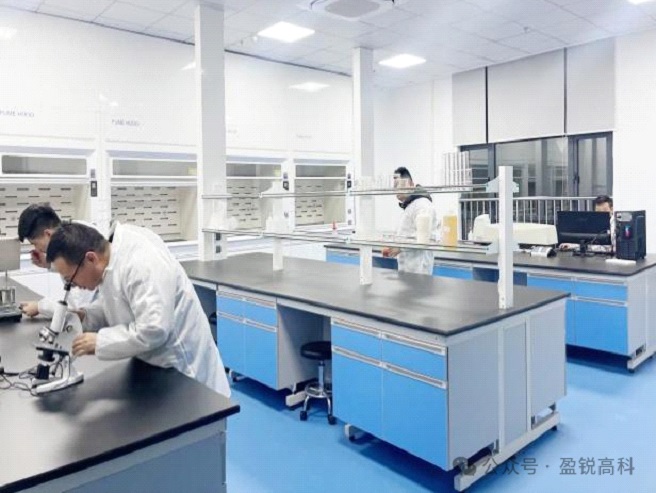
The prominent industry pain point in wind-solar renewable hydrogen production comes from the challenge of frequent start-stop operation. Under such conditions, traditional electrodes easily suffer declining stability and rapid performance decay, mainly caused by multiple factors including insufficient coating adhesion, cavitation damage, reverse-current shocks and potential corrosion.
From the perspective of catalytic materials, here is a technical breakdown of the mainstream commercialised electrode types:
(1) Nickel-aluminium binary electrode. Nickel-aluminium powder is used as the catalytic feed, applied to a nickel-mesh substrate by thermal spraying; after activation and aluminium removal, a porous catalytic coating forms on the substrate, with catalytic activity mainly relying on the material's large specific surface area. Shortcomings: ① the higher the specific surface area, the weaker the porous coating's structural stability; ② under high current-density conditions the porous structure's cavitation resistance is insufficient and the coating easily flakes off; ③ nickel and aluminium differ greatly in density, making it hard to mix the physical powder completely uniformly — during operation the electrode surface current density is unevenly distributed, causing local overheating and a safety risk; ④ conventional recommended operating current density is no higher than 2,500 A/m².
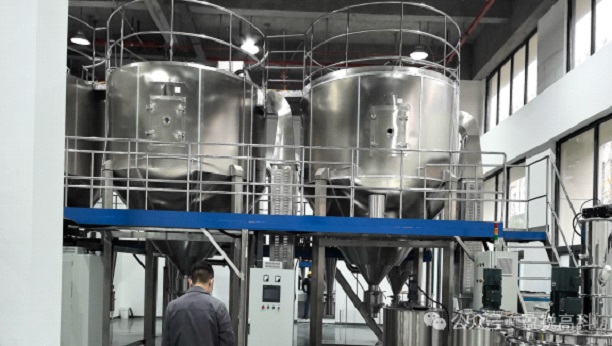
(2) Multi-element metal electrode. Powder doped with transition metals such as iron, cobalt, nickel, molybdenum and tungsten is thermally sprayed onto a nickel-mesh substrate; activation and aluminium removal form a porous coating, with catalytic effect from the transition-metal synergy and large specific surface area. Shortcomings: ① as specific surface area rises, porous-coating stability falls; ② limited cavitation resistance under high current density, coating easily flakes off; ③ frequent start-stop generates reverse current that induces electrode corrosion; ④ the potential difference between transition metals and the nickel substrate means active metals are easily electrochemically corroded, causing rapid performance decay.
(3) YR High-Tech ceramic electrode. Uses nickel-coated high-activity ceramic composite powder, formed on a nickel-mesh substrate by thermal spraying; catalytic activity comes from the material's intrinsic properties rather than a large porous specific surface area. Core advantages: ① breaks the 'higher specific surface area, worse cavitation resistance' trade-off — structurally stable under high current density; ② no activation treatment needed, avoiding coating damage from the activation step, with better stability and environmental performance; ③ the ceramic matrix is corrosion-resistant, with excellent electrochemical and thermal stability; ④ during operation the coating generates oxygen vacancies that effectively increase catalytic active sites and give it semiconductor-like behaviour; ⑤ the oxygen-vacancy ceramic layer is non-conductive in reverse, avoiding galvanic-effect potential corrosion, suiting fluctuating wind-solar power conditions and ensuring long-term stable equipment operation.
YR High-Tech is a high-end manufacturing enterprise built on materials technology, with full-chain mastery of intrinsic catalytic-material R&D, powder preparation, catalytic-coating design and thermal-spray surface treatment. It provides nickel-aluminium alloy electrodes, OER electrodes and ceramic electrodes as products and complete solutions to water-electrolysis hydrogen equipment makers.
The company is committed to becoming an important participant in high-performance catalytic electrodes for water-electrolysis hydrogen, continuously delivering localised new-material technology to support the new-energy industry.